


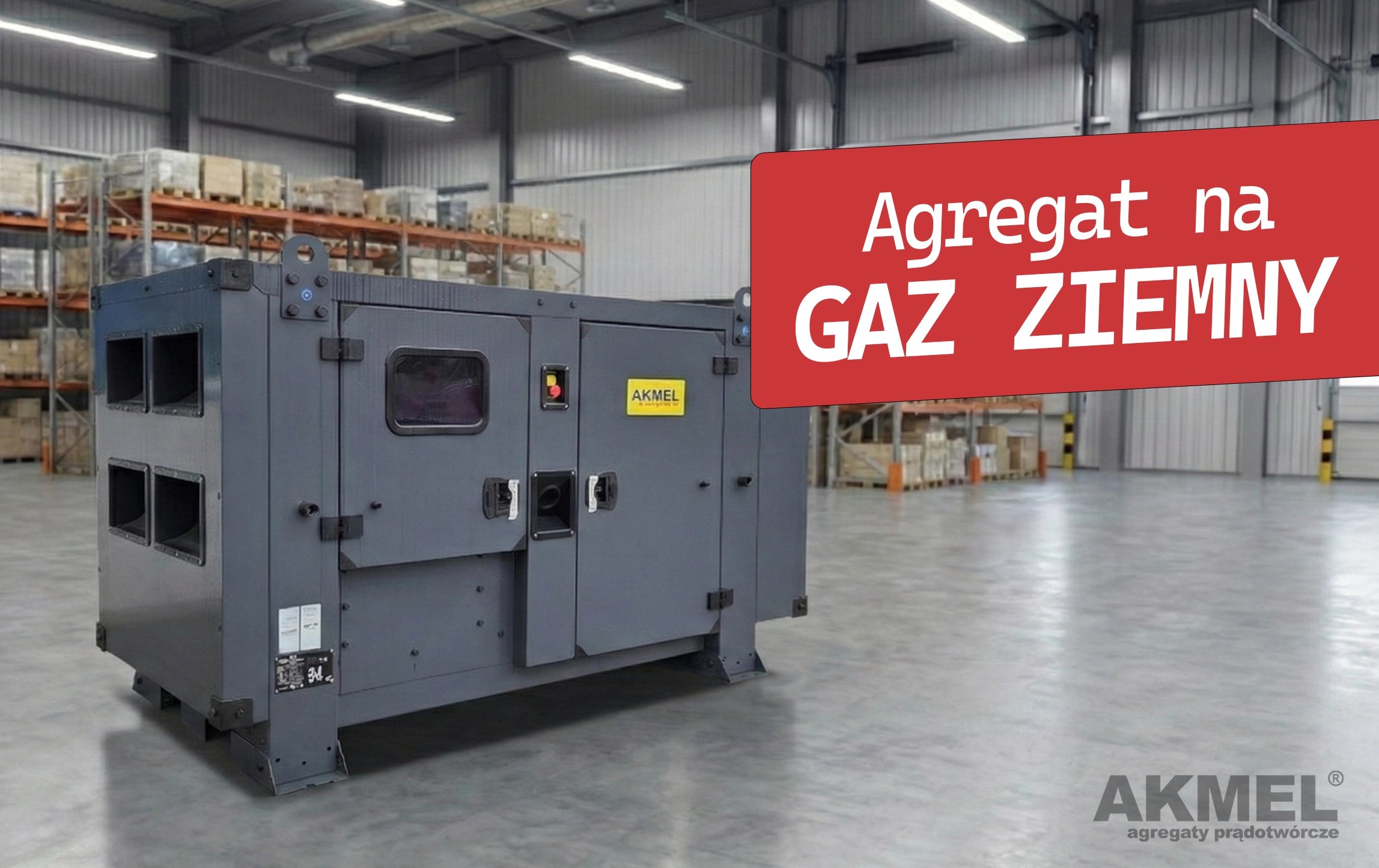
Natural Gas Generators: The Future of Emergency and Eco-Friendly Power Supply?
Natural gas generators are becoming increasingly popular as an alternative to traditional gasoline or diesel-powered units. But is it really the better choice? What should you know before buying a natural gas generator? In this article, you’ll find answers to the most important questions about natural gas-powered generators, their applications, advantages, and limitations.
What is a natural gas generator and how does it work?
A natural gas generator produces electricity by burning natural gas in an internal combustion engine. The engine’s mechanical energy drives an alternator, which generates electricity. The process can be fully automatic, especially in models equipped with ATS (Automatic Transfer Switch).
Key components:
- Gas engine – optimized for burning natural gas.
- Alternator – converts mechanical energy into electricity.
- Gas supply system – valves, regulators, filters.
- ECU controller – manages operating parameters.
- Enclosure – may be soundproof or industrial type.
What types of natural gas generators are there? 1. Residential (up to 10–15 kW)
2. Industrial (from 20 kW to 2+ MW)
3. Hybrid (multi-fuel)
Why choose a natural gas generator?
|

What are the disadvantages of natural gas generators?
How to connect a natural gas generator?
Is it worth investing in a natural gas generator? Who are gas generators for?
|

Summary: Is a natural gas generator a good choice?
Yes, but not for everyone. If you have access to natural gas and value reliability, low costs, and eco-friendliness, then a natural gas generator is an excellent choice. For those needing a mobile or cheaper entry-level solution, a traditional gasoline or LPG generator may be better.

Konrad Skrzypczyk
Content prepared based on AKMEL’s experience in the sale, service, rental, and implementation of emergency power supply systems for companies, industry, and institutions.
