


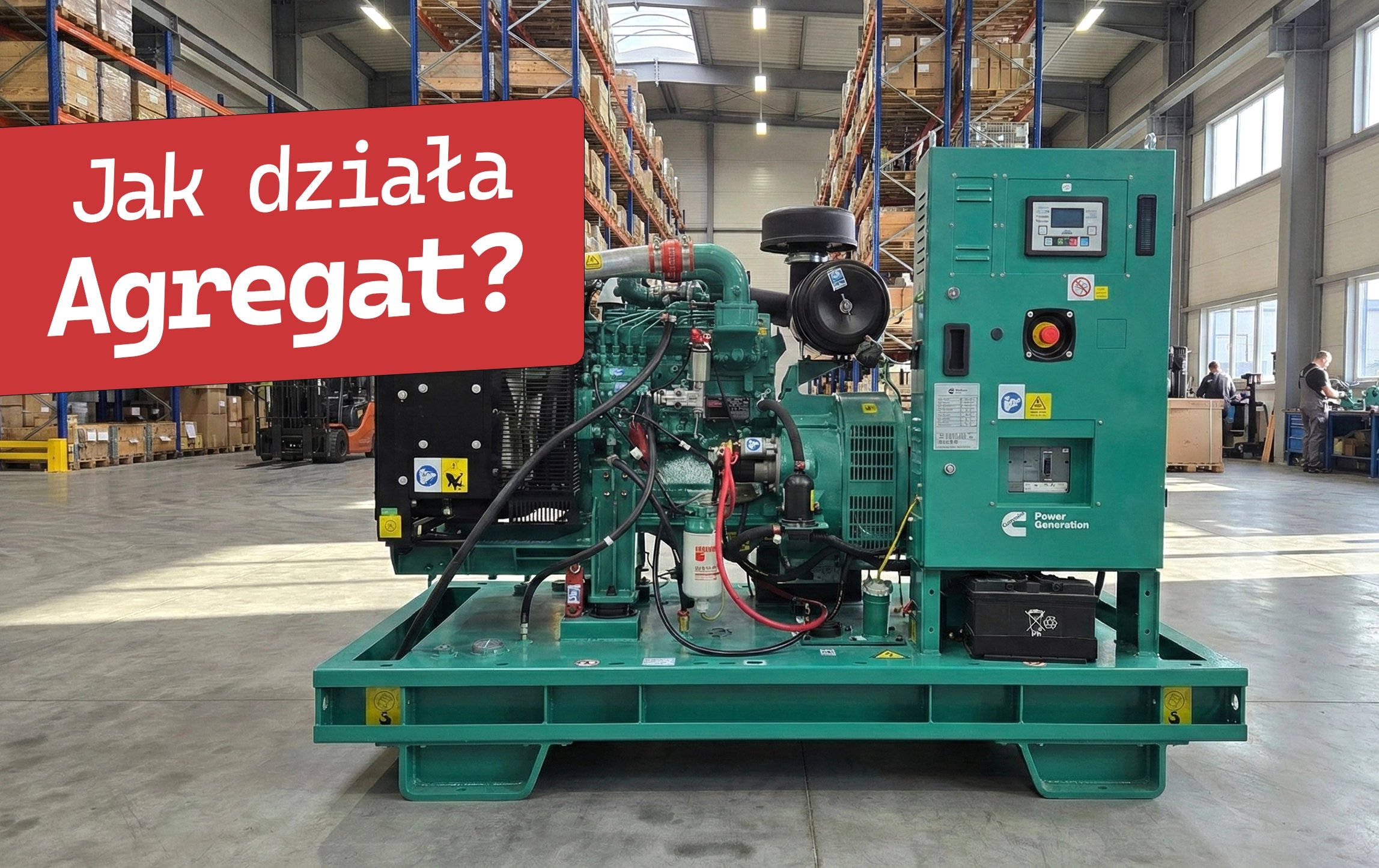
Electricity has become something obvious to us, present in everyday life. Many people also own a power generator, whether at work or at home. Every generator user should know the basics of how this device works.
Electricity has become something obvious to us, present in everyday life. Many people also own a power generator, whether at work or at home. Every generator user should know the basics of how this device works.
How does a power generator work?
The first thing worth emphasizing is the power supply aspect. Every generator is a combustion device, or more precisely, an electromechanical device whose role is to convert mechanical energy into electrical energy. A generator consists of several parts: a combustion engine, an alternator, and an electrical distribution panel.
Construction of a power generator
Combustion engineEvery generator contains a combustion engine that drives the alternator, which is the second essential component of any generator. Combustion engines can, of course, come in various versions, e.g. gasoline, diesel, or gas. By burning fuel, electrical energy is generated. The engine shaft is driven, and then the mechanical energy is transferred via a clutch to the alternator. It should be emphasized that generators use constant-speed engines. Once they reach the nominal speed (1500 RPM, 3000 RPM, etc.), they maintain it regardless of the load applied by the alternator. This is crucial because the engine is responsible for stabilizing the frequency of the current (Hz). That is why we distinguish several stabilization classes – from G1 to G3 – which can be found in generator data sheets. The higher the class, the better the frequency stabilization. |
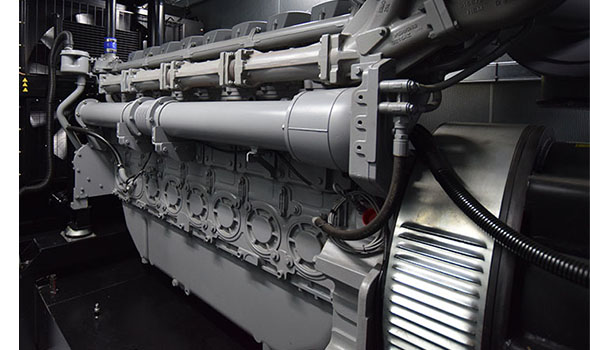
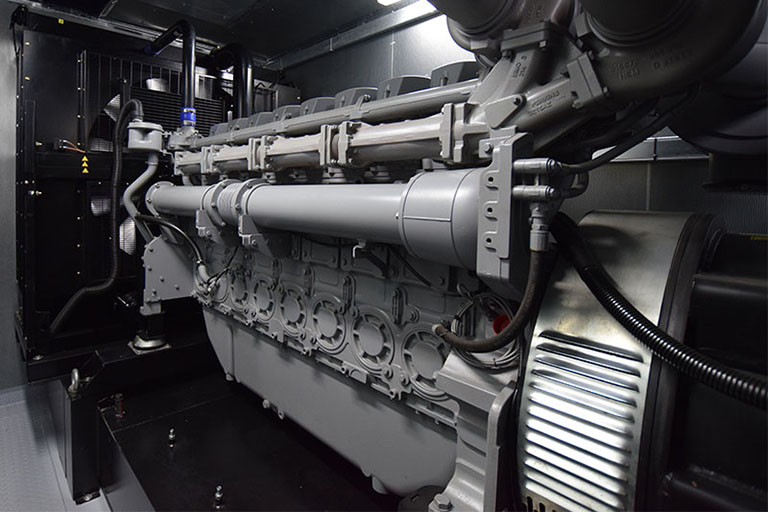
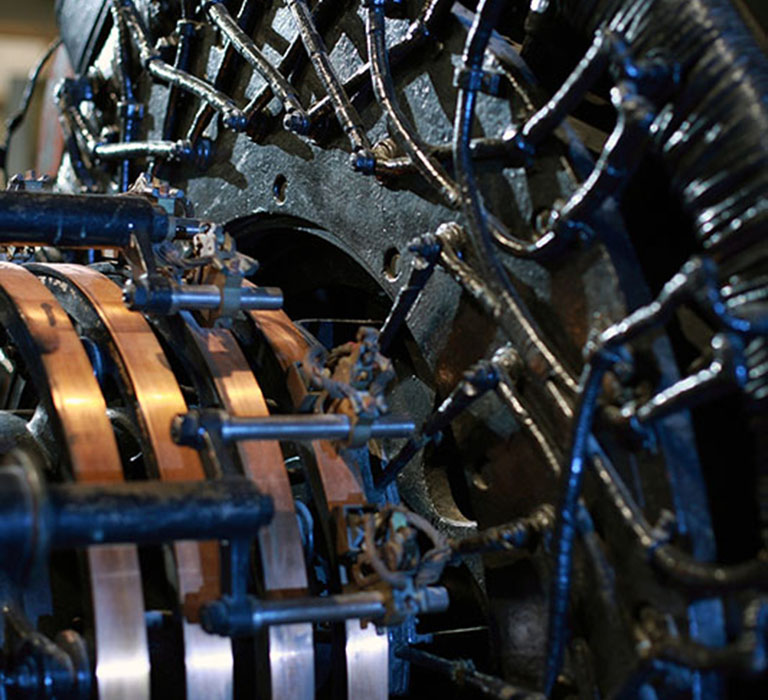
AlternatorThe alternator is the next key element of a generator. It is directly responsible for producing electricity. Using the phenomenon of electromagnetic induction – which is the generation of voltage at the ends of a coil rotating in a magnetic field – current is produced. The alternator housing consists of a cylindrical stator. Inside the stator is a mechanical rotor driven by the shaft of the combustion engine. On it is placed the winding. By rotating, it generates an electromotive force. The changing magnetic flux of the rotating rotor is responsible for generating electrical current in the stator circuit. In English, the alternator is called exactly that, since the principle of its operation is the same; only the drive method differs. Just as the engine is directly responsible for frequency stabilization, the alternator ensures voltage stabilization. |
AVR
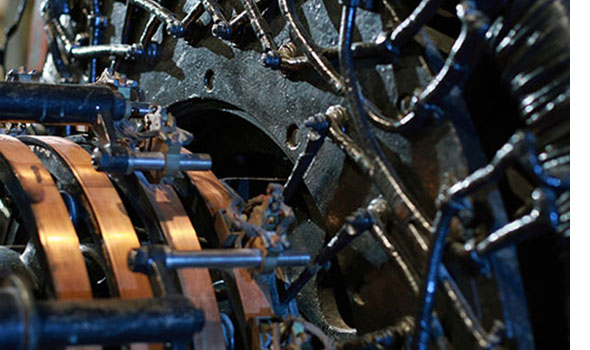
At the power output of the alternator, there is another important device: the AVR, or Automatic Voltage Regulator. In high-power generators, it is already standard equipment. In smaller devices, it is still possible to build a generator without an AVR depending on its purpose. The AVR regulates the output voltage to protect connected devices from damage. This mainly applies to computer equipment, controllers, consumer electronics, medical, or telecommunications equipment.
It is worth knowing the basic principles of the equipment you use. However, when it comes to more detailed knowledge, we encourage you to contact both our sales and service departments. Our staff will be happy to help you with all technical matters.
Contact us!

Piotr Dzieciuch
Content prepared based on AKMEL’s experience in the sale, service, rental, and implementation of emergency power supply systems for companies, industry, and institutions.
