


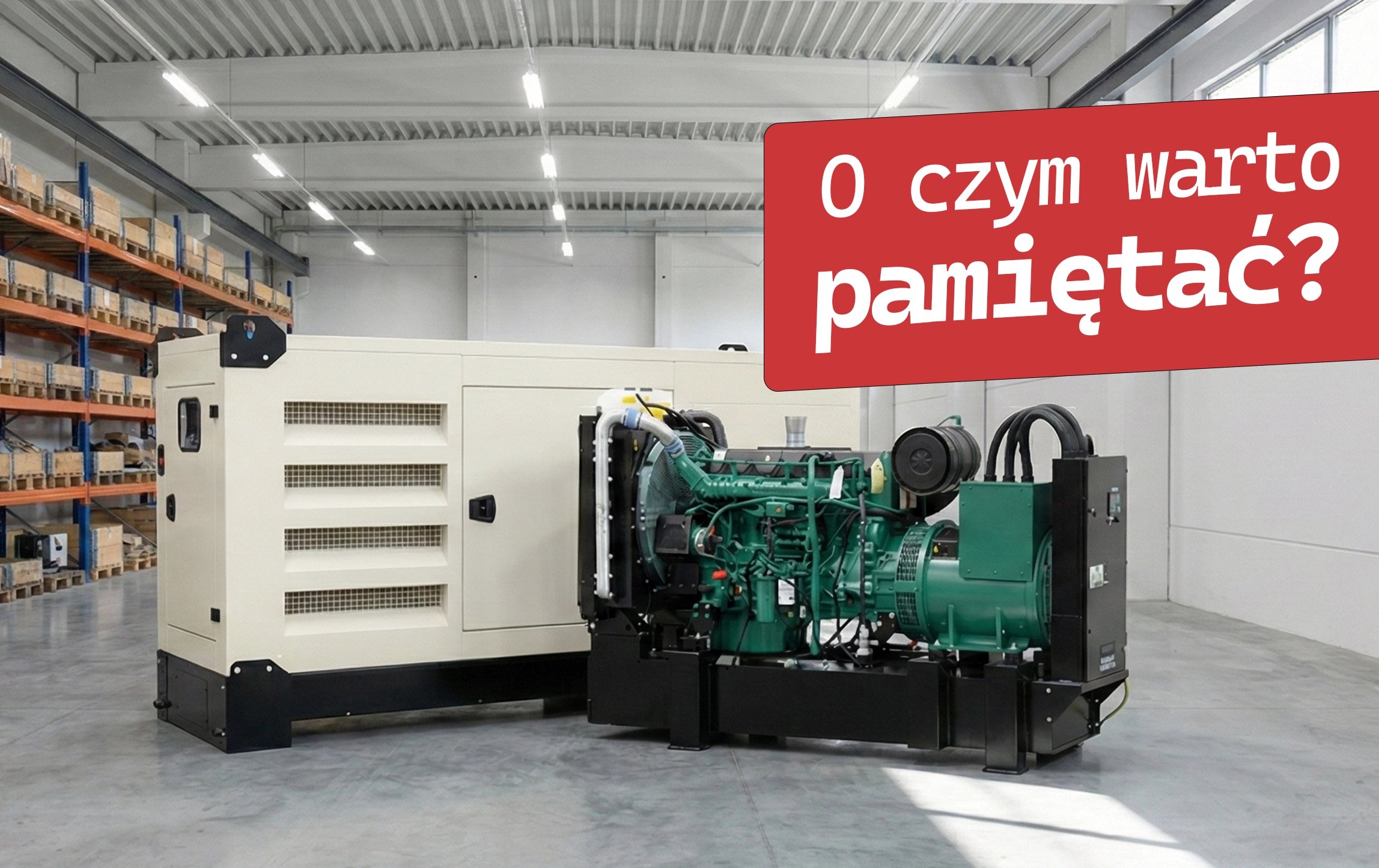
When buying a power generator, it is worth considering what parameters the device should have to suit your needs. Generator power and fuel tank capacity are not everything. There are several other important parameters that affect the functionality of the generator and therefore its purpose. What should you check when buying a generator?
Power of a generator
When choosing a generator, you need to make sure that the selected model can power all the devices that are to be connected to it simultaneously. This is a simple rule, and it applies both when selecting small portable suitcase generators and larger stationary units. It is important to note that the rated power of the generator should be significantly higher than the expected nominal power consumption.
The difference between the rated power should be greater, the higher the generator load is. For large stationary generators powering extensive home installations, it is recommended to use units with a rated power exceeding the power of simultaneously powered receivers even by two times. This results from the high inrush currents drawn by some devices during startup. If you have difficulty choosing the right generator, we encourage you to contact our customer service department.
What type of fuel is best for powering a generator?
On the market, you can find generators with engines powered by gasoline, diesel, and gas. When choosing a generator, it is worth considering economic factors and the availability of the given type of fuel.
- Gasoline-powered generators – this is by far the most popular category of devices. Gasoline powers both portable and stationary generators.
- Diesel-powered generators – a solution typical for powerful construction and industrial generators. They perform well on construction sites and in all situations where the noise level generated by the engine is not a limitation.
- Gas-powered generators – available as portable and stationary units with LPG-powered engines, as well as large stationary generators on natural gas (LNG), which are an alternative to diesel-powered models.
For simple portable and stationary home generators, the best choice seems to be quiet generators with gasoline or LPG engines. For industrial applications and for powering installations in commercial, medical, and public facilities, it is recommended to use powerful stationary diesel units or LNG gas generators.
How important is the noise level generated by a working generator?
When buying a generator, it is worth choosing a device that generates the lowest possible noise level. A quiet generator means less inconvenience during construction or renovation works and when using backup power at home or in a company.
Portable or stationary generator – which is better?
In principle, every generator can be considered portable. Even the largest devices are available in container housings, which makes them easy to transport almost anywhere.
- Stationary generators – suitable as devices for emergency power supply in medical, industrial, and residential installations. In such cases, the generator is usually installed permanently in a prepared location.
- Portable generator – a solution that enables powering devices where there is no access to the power grid. It is suitable for use in gardens, on construction sites, or during various events and rescue operations.
When buying a portable generator, it is worth considering a suitcase-type model. If a device with greater power is needed, models equipped with wheels or a trolley may be a good solution. Large mobile generators are also available as units mounted on trailers. This is a convenient way to transport heavy, high-power generators often used by construction and installation contractors, as well as services such as the fire brigade or police.
Should the device generate three-phase power?
When buying a portable or stationary generator, it is worth asking yourself whether you need three-phase backup power. If so, you should choose a three-phase model. It is worth remembering that three-phase generators also generate single-phase current, which allows powering 230 V receivers as well.
Should the generator be equipped with a voltage regulator?
There are generators with a voltage regulator and simpler models without regulators available on the market. For powering many power tools, pumps, and other devices, simple models without regulators are sufficient. Such generators are suitable for construction sites or for use in gardens. In some cases, it is better to use a generator with a regulator, which stabilizes power parameters and protects sensitive receivers from damage that may occur due to being powered with electricity of improper parameters. A good generator should be equipped with an AVR (Automatic Voltage Regulator).
Is it worth using an automatic transfer switch (ATS)?
A generator is not only a device for powering equipment where there is no access to the power grid. When using a generator as a backup power source, it is worth considering an investment in additional automation for switching on backup power as soon as a power outage or deterioration of grid parameters occurs. This solution starts the generator without involving the user.

Piotr Dzieciuch
Content prepared based on AKMEL’s experience in the sale, service, rental, and implementation of emergency power supply systems for companies, industry, and institutions.
