


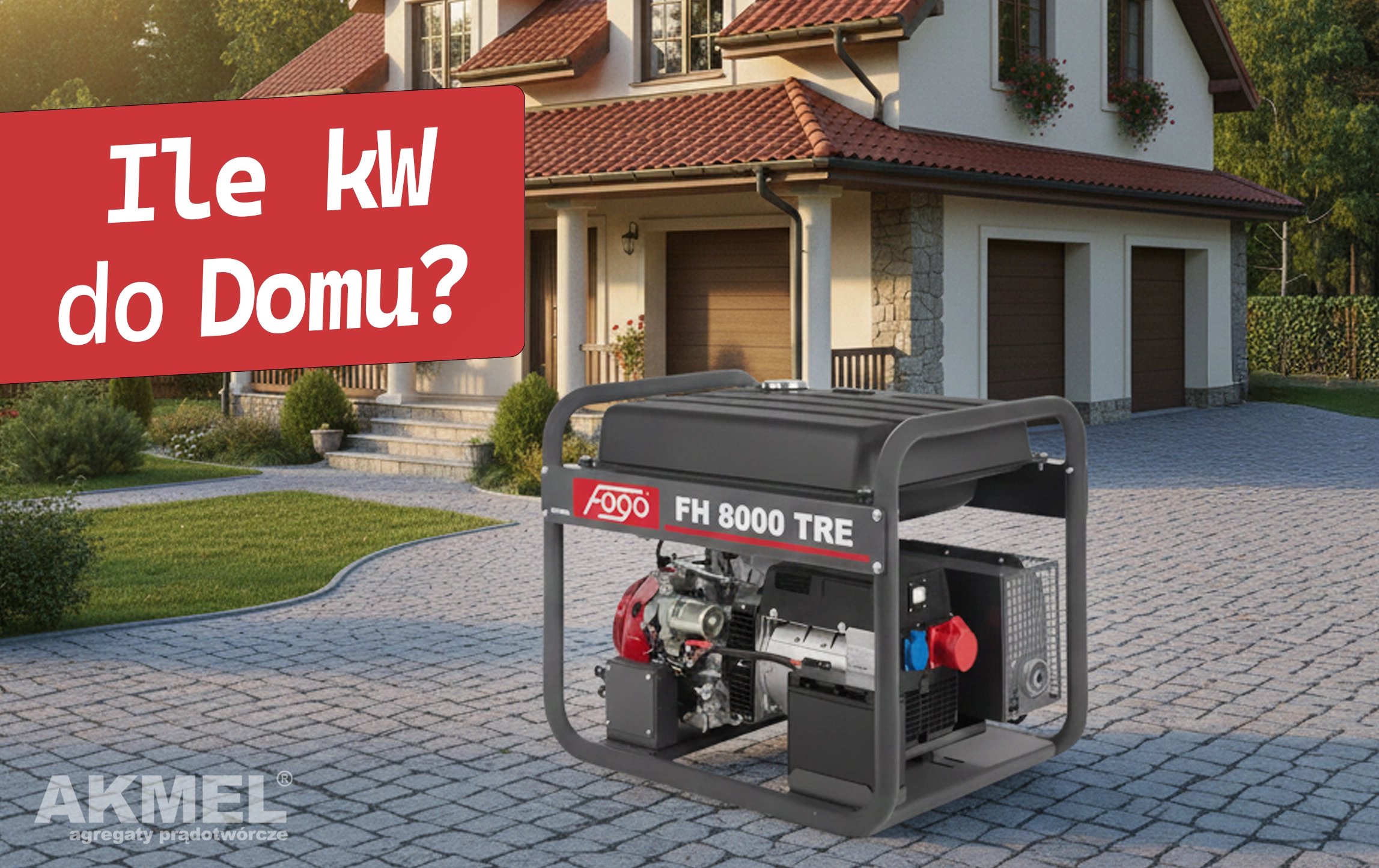
A home power generator should have enough capacity to supply the selected electrical devices. For generators intended to power devices with low energy consumption, small generators with a capacity of 2.5 kW may be sufficient. When more energy is needed, a more powerful device will be necessary. It is worth knowing that generators can power both single-phase devices and heavy three-phase loads.
A home power generator should have enough capacity to power the selected electrical devices. For generators intended to supply devices with low power consumption, small units with a capacity of 2.5 kW may be sufficient. When more energy is needed, a more powerful unit will be necessary. It is worth noting that generators can supply both single-phase devices and high-power three-phase receivers.
What to check to choose the right generator for your home?
When deciding to buy a home power generator, many criteria need to be considered. The device must provide power to key appliances and should also be suited to the location where it will be installed. One of the most commonly chosen solutions for households are generators for emergency power supply of central heating boilers. Increasingly, backup power is also used to supply other household devices, and even the entire electrical installation.
Which generator for a central heating boiler, heat pump, and workshop?
When considering the installation of a powerful generator to power a heat pump, it is worth thinking about whether to also provide backup power for other devices in the home. More and more homeowners are choosing to install high-capacity units that power the entire household installation, just like grid electricity. Systems equipped with a 40 kW or 80 kW generator are becoming standard. It is no longer surprising to see backup systems with a 150 kW generator or even a 200 kW generator. A 150 kW or more powerful 200 kW generator can also successfully power workshop or business equipment.
How to choose the generator power for a home?
Selecting a generator for home applications can be quite complex. Many devices are available on the market that are commonly used in Polish homes and garages. A home generator is increasingly being used as a backup power source and is becoming an integral part of the household electrical system. How to select its power? Simply determine the power consumption of the devices that will be powered by the generator in case of need, and choose a unit whose rated power is not less than the total power of the receivers. It may sound simple, but there are several other recommendations worth considering.
Check the total power of the devices to be powered by the generator
When choosing a generator for home use, you should calculate the power of all the devices that will be powered in case of need. The total power of the devices should not exceed the rated power of the home generator. Moreover, it is recommended to use generators with rated power significantly higher than the rated power of the simultaneously powered devices, to avoid issues with the quality and continuity of emergency power supply when additional devices are switched on.
Choose a device with power reserve compared to the load generated by the receivers
According to the experience of users of home generators powering heating systems, alarm systems, or even entire household installations, the best solution is to install units with power significantly higher than the total consumption of the devices running simultaneously. The solution that guarantees stable power parameters is to use a generator with a rated power at least twice as high as the total load of powered devices.
Why is a power reserve for a generator so important?
The power reserve for home generators seems relatively small compared to industrial generators, where units with rated power up to ten times greater than the load of the receivers are used. The need for a reserve comes from the inrush currents of devices, which at startup consume several times more power than during normal operation. It is crucial that the home generator can supply all connected devices at the moment of startup.
Choose a good location for installing a home generator
When planning the installation of a generator, it is recommended to place the unit as close as possible to the connection point and distribution board, to minimize losses generated by cabling. If you have difficulty choosing a generator tailored to your needs, we encourage you to contact our sales department. Our staff will be happy to advise you on what works best in similar conditions. We will guide you in selecting a generator for a central heating boiler, a heat pump, other appliances, or even the entire household electrical installation.

Konrad Skrzypczyk
On a daily basis, supports customers in selecting generator sets, analyzing facility requirements, and choosing emergency power supply solutions for companies, industry, and institutions.
