


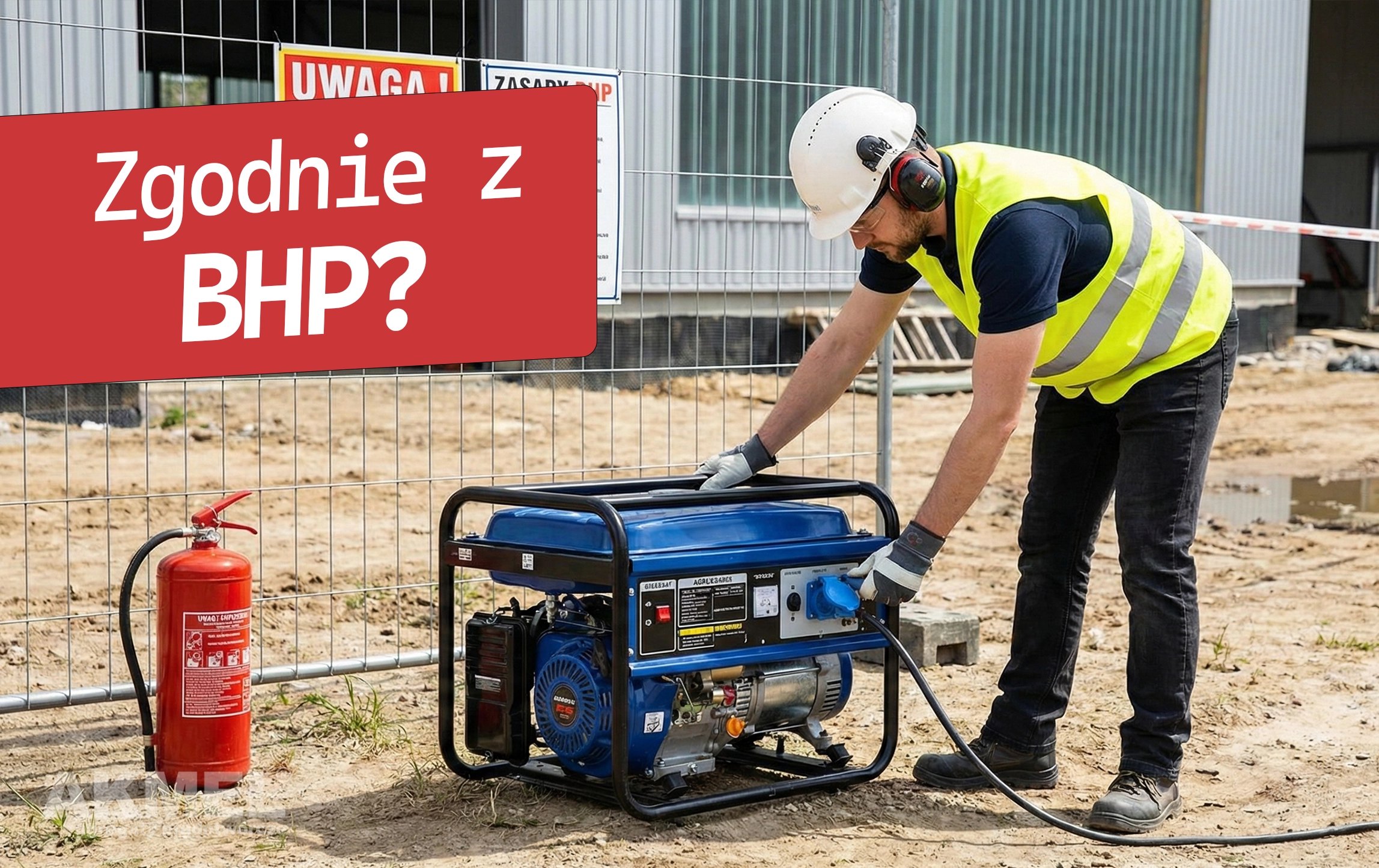
Power generators are commonly used wherever it is necessary to provide an alternative power source in the event of a power grid failure. However, such devices must be operated properly. What do health and safety regulations say about this?
Who Can Operate Power Generators?
Power generators can only be operated by authorized personnel. In production plants or public facilities, employees are often designated to be responsible for controlling such equipment. These individuals are well-versed in the operation of power generators and the health and safety regulations associated with their use. These devices should be placed in areas inaccessible to children.
Actions Before Starting a Power Generator
Before starting a power generator, it is necessary to ensure that no objects or substances are nearby that could cause ignition or explosion. No objects, especially metal ones, should be placed on the generator housing. Before switching on the equipment, it is also important to check that it is not positioned in an area where liquids have been spilled. If water is present, it could result in electric shock to the operator, and if flammable substances are present – ignition or explosion.
It is also essential to check the direction in which exhaust gases will be released. The muffler outlet should be positioned at a safe distance from any obstacles, especially walls. For example, in open spaces, the minimum distance should be 1.5 m.
Fueling a Power Generator
A power generator requires fuel – gasoline, diesel, or gas. These fuels are available even during a power outage, allowing the generator to independently produce electricity. Refueling power generators must meet numerous safety standards. It should only be done when the device is turned off and placed on a flat surface, away from sources of high temperature, fire, or vapors of flammable substances – most commonly paints, varnishes, and technical gases.
There are additional rules for refueling generators. The operator must ensure electrostatic charges are discharged to the ground before pouring fuel. To achieve this, the backup power unit must have proper contact with the ground. The fuel container should also be placed on the ground before refueling.
Generators should never be refueled while in operation. Doing so could pose a serious risk not only to the operator but also to the device itself.
Other rules related to refueling a generator include:
- when refueling from a container, a special funnel with a strainer must be used. This prevents mechanical impurities from entering the fuel tank,
- before starting the refueled unit, ensure that no one is standing directly behind the operator. This is particularly important for manually started generators, which require strong, sudden hand movements.
Where Can Power Generators Be Used?
It is also extremely important to create suitable working conditions for the device. Generators emit harmful exhaust gases. On the market, there are models designed for outdoor use, equipped with weatherproof enclosures, as well as models intended for indoor use. For indoor generators, proper ventilation must be ensured. Exhaust fumes contain odorless carbon monoxide, which can cause serious illness or death. Since this substance is lighter than air, it is necessary to ensure it does not pose a risk to people located above the area where the generator is placed.
Generators are equipped with metal exhaust pipes. These components can reach very high temperatures during operation. For this reason, it is necessary to ensure they do not come into contact with flammable materials or are not directed towards them.
Generators must be placed on the ground. They cannot be suspended on a wall or ceiling. The same applies to other components and parts of the system. The unit must be securely fixed to prevent falling and must stand on a level surface.
Safety Measures for Power Generator Operators
Working near a power generator carries numerous risks. For this reason, operators of such equipment must use protective gear. This primarily includes noise-reducing accessories, since generators are quite loud. Operators should also use respiratory protection (as generators produce harmful fumes) and specialized safety footwear. Protection against high temperatures or fire is also important – operators therefore use fire-resistant clothing and gloves.

Wojciech Ryczek
On a daily basis, supports customers in selecting generator sets, analyzing facility requirements, and choosing emergency power supply solutions for companies, industry, and institutions.
